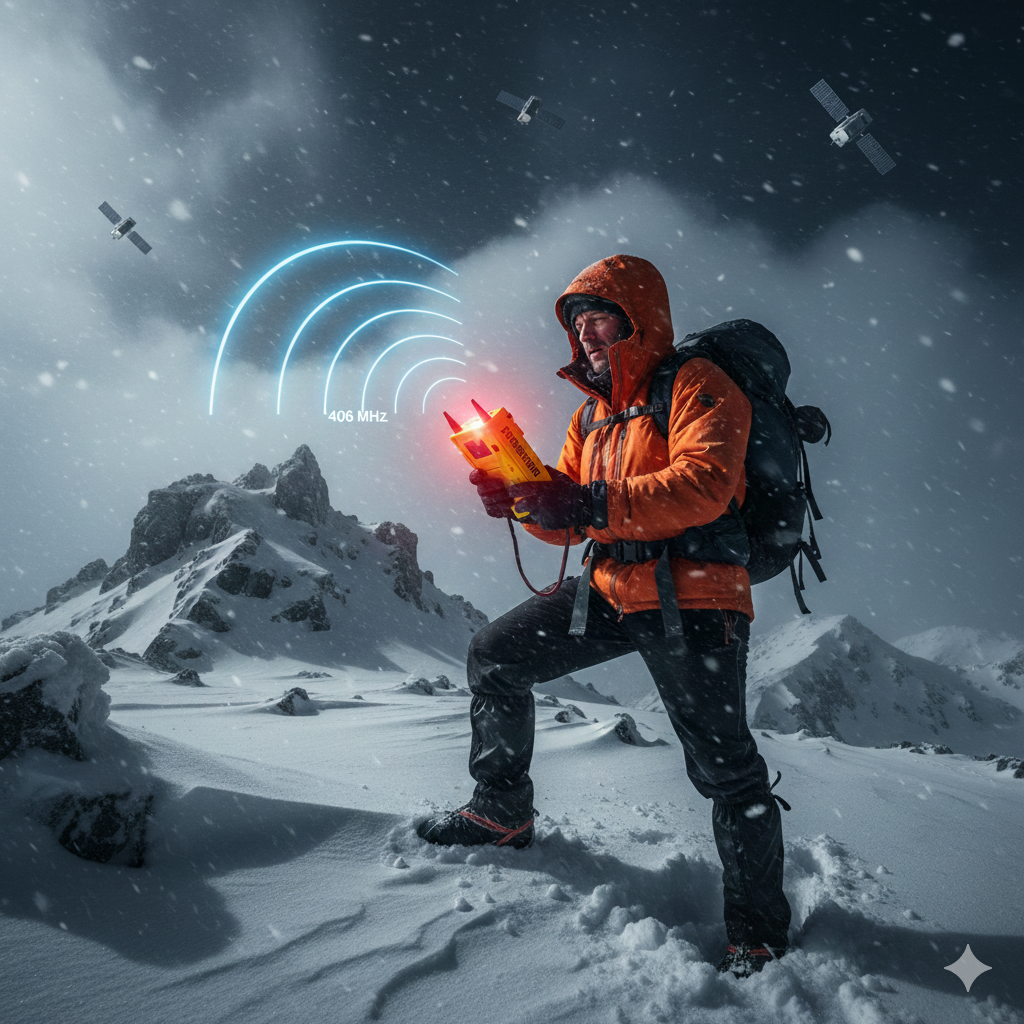
(ELT )Emergency Locator Transmitter, A Complete, Human-Friendly Guide to the Lifesaving Device That Works When Everything Else Fails ✈️📡❤️
In any emergency, especially when communication is cut off, help becomes a race against time. There is a need for help in no time. Whether someone is lost anywhere in the wilderness or an aircraft crashes anywhere in an uninhabited area, the biggest challenge and question is always the same: How will rescuers find that lost person?
The only silent hero that exactly does the task is the Emergency Locator Transmitter. It doesn’t ask for permission.
It doesn’t wait for someone to press a button or ask for help or give a command.
It simply activates itself and screams for help on your behalf.
In this extended guide, you have a chance to know and learn all these points like Emergency Locator Transmitter what ELTs are, how they work, who uses them, what frequencies they operate on, how they sound, why antennas matter, and how inspections are done , all these points are explained in a warm, natural tone easy for you to understand and gain knowledge about all the things you must need to know.
Let’s dive deeper into every part for you of this life-saving technology. 🌍✨
⭐ An ELT? A Simple Explanation for Everyone ✈️🆘
An Emergency Locator Transmitter (ELT) is a small device specifically engineered to transmit a distress signal in the event of a serious incident, particularly in aviation or isolated outdoor areas. Consider it as a protective entity that activates at the moment of impact, promptly notifying the world that assistance is required. ELTs operate independently of the pilot or hiker, requiring no manual activation. Once they are triggered, they commence sending signals skyward, where satellites attentively monitor.
This signal functions as a digital SOS, conveying the following messages: ➡️ “An accident has occurred.” ➡️ “Here is the precise location.” ➡️ “Immediate assistance is needed.” Even if individuals are unconscious, injured, or unable to convey their situation, the ELT persistently transmits this message without pause.
⭐ Why These Matter More Today Than Ever Before 🌍⚠️
We inhabit a world where individuals travel more extensively, explore diverse locations, and often find themselves in areas devoid of phone signals. Mountains, oceans, deserts, and remote forests are all stunning yet perilous when emergencies arise. Emergency Locator Transmitters (ELTs) serve as a reliable backup system that operates independently of cell towers or human intervention. They function effectively when: ❌ Phones lack signal Radios cease to operate
❌ Individuals are unable to request assistance ❌Weather conditions obstruct communication The ELT is designed for the most critical situations — and as a result, numerous lives have been preserved. For those involved in rescue operations, this device is not merely beneficial — it represents a transformative advancement.
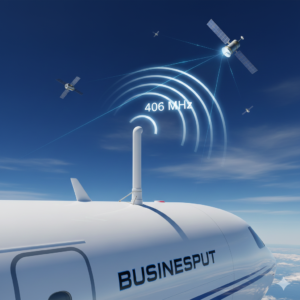
⭐ How it Works🛰️📡
The working is beautifully simple, yet extremely powerful and amazing.
Here’s what happens in the background: the whole story
1️⃣ A crash or hard impact occurs
Inside the it is a tiny sensor called a Gswitch, which detects force. When a sudden, strong impact happens, the switch activates the transmitter.
G-Switch in an Emergency Locator Transmitter
A G-switch, also known as a Gravity switch, in an Emergency Locator Transmitter is a small impact-sensing device that automatically activates when an aircraft undergoes a significant force, such as during a crash or a very hard landing. ⚠️✈️ It is capable of detecting rapid deceleration or abrupt changes in motion, which are measured in terms of ‘G-forces.’
The instant this force surpasses a predetermined threshold, the G-switch activates and prompts to begin transmitting a distress signal. 📡🆘 Consequently, it will turn on even if the pilot is incapacitated, rendering the G-switch an essential life-saving element of aviation safety systems. ❤️🚁
2️⃣ The ELT immediately begins sending signals
The device starts transmitting emergency messages. These signals contain:
✔ Location
✔ Time of activation
✔ Identity (for aircraft ELTs)
✔ Distress code
3️⃣ Satellites pick up the signals
The global COSPAS–SARSAT satellite system constantly listens for 406 MHz distress signals.
These satellites are designed specifically to detect emergencies anywhere on Earth.
4️⃣ Ground stations receive the alert
Once the satellite confirms a distress call, it sends the information to rescue coordination centers.
5️⃣ Rescue teams are sent
Helicopters, search teams, and emergency responders are dispatched to the exact location.
This entire chain can happen within minutes.
It ensures that no emergency goes unnoticed — even in places where humans can’t call for help.
⭐ Understanding Frequencies: The Heartbeat of Every Distress Signal 📡💓
Frequency determines how an ELT communicates.
Here are the two main ones:
🔹 406 MHz — The Modern Lifesaving Frequency
This is the digital frequency monitored by satellites.
It sends detailed information like:
📍 GPS coordinates
🆔 ELT ID
⏱ Activation time
Rescuers receive location accuracy of 100 meters or less which is unbelievably precise during emergencies.
This frequency works globally, 24/7, regardless of weather, terrain, or country.
🔹 121.5 MHz — The Local Homing Signal
Although no longer satellite-monitored, this frequency is still crucial because it helps rescuers home in directly on a signal.
Helicopters and search teams use this to narrow down the final location when they are close to the accident site.
This is why modern ELTs transmit both 406 MHz + 121.5 MHz —
One calls for help globally,
The other guides rescuers locally.
⭐ What Does it Sound Like in The Emergency 🔊🚨
The sound is a sharp, repetitive emergency tone.
It’s not designed to be pleasant — it’s designed to be impossible to ignore.
The rhythm is usually:
📢 “Beep—beep—beep—beep”
Rescue radios pick up this tone and help teams zero in on the exact location.
Pilots may hear it during testing, but in real situations, it is a sound that signals urgency and survival.
⭐ Why the Antenna Is the Most Important Part 📡🎯
The antenna is like the mouth of the ELT — it sends the signal upward.
A strong signal relies heavily on a strong antenna.
If the antenna breaks, bends, or disconnects during impact, the signal weakens dramatically.
A good antenna must:
✔ Be securely installed
✔ Point upward or outward
✔ Survive hard impacts and vibrations
✔ Work for both 406 MHz & 121.5 MHz
In aircraft, antennas are made aerodynamic and durable.
For hikers, antennas are foldable, rugged, and designed to survive drops or harsh weather.
Simply put:
No antenna = No signal.
⭐ ELTs in Aircraft — The Lifeline of Aviation Safety ✈️🆘
Aircraft often travel over oceans, mountains, deserts, and remote regions where communication is impossible if an emergency occurs.
This is why aviation regulations require ELTs.
They are mandatory for:
✈️ Commercial airliners
✈️ Private planes
✈️ Helicopters
✈️ Cargo aircraft
ELTs help authorities quickly find crash sites, even in the middle of nowhere.
They also help avoid long, uncertain searches that drain resources and delay rescue efforts.
For pilots, ELTs are a silent reassurance that even in the worst scenario, help will still know where to look.

⭐ Different Types of Aircraft ELTs: Purpose and Use 🛠️✈️
🔹 ELT-AF (Automatic Fixed)
Permanently installed in the aircraft and activates during impact.
🔹 ELT-AP (Automatic Portable)
Can be removed from the aircraft and used by survivors.
🔹 ELT-AD (Automatic Deployable)
Ejects automatically during a crash or impact and floats in water for maritime survival.
🔹 ELT-S (Survival ELT)
Stored inside life rafts or emergency kits and activated by survivors after evacuation.
Each type plays a role depending on the aircraft, environment, and operation type.
⭐ ELTs for Hiking and Adventure — A Lifesaver in Remote Places 🎒🆘🌲
Hikers, climbers, and outdoor explorers face unpredictable conditions — harsh weather, tricky terrain, and zero mobile coverage.
This is why Personal Locator Beacons (PLBs) are essential.
PLBs are small, lightweight devices hikers carry as a safety backup.
A single push of a button on a PLB sends a powerful 406 MHz signal directly to satellites, just like an aviation ELT.
They work during:
🏔 Avalanche
🌲 Forest emergencies
❄ Snowstorms
🌧 Flash floods
🌚 Night-time rescue
For many hikers, a PLB is as important as boots or water bottles.
⭐ The Difference Between ELTs and PLBs ✈️ vs 🎒
Both ELTs and PLBs save lives, but they are meant for different situations.
✈️ ELT — for aircraft
Automatically activates during impact
🎒 PLB — for hikers and general users
Activated manually with one button
PLBs are portable and personal, while ELTs are mounted inside aircraft.
But both rely on the same global satellite rescue network — COSPAS–SARSAT.
⭐ ELT Inspection — Why It Matters More Than People Realize 🔧📋
An ELT only works perfectly when it is inspected regularly.
A simple inspection can uncover issues that may become deadly in real emergencies.
A technician checks:
✔ Battery health
✔ Antenna condition
✔ Activation switch
✔ GPS module
✔ Self-test response
✔ Physical mounting
Even one loose wire can reduce signal strength.
Even a weak battery can shorten transmission time.
Inspections ensure the ELT will do its job when human lives depend on it.
⭐ ELT Batteries — The Quiet Engine Behind the Signal 🔋⚡
The battery is not just a component — it’s the heart that keeps it alive.
Batteries must:
✔ Work for 24–48 hours nonstop
✔ Survive extreme temperatures
✔ Be replaced before expiry
If an ELT is triggered even for a few seconds, the battery must be replaced.
This ensures that the next emergency will receive full signal strength.
⭐ How Quickly it Help to Save Lives ⏱️🚁
Modern ELTs alert satellites within 3–5 minutes.
This timing can mean the difference between life and death.
The process:
➤ Signal sent
➤ Satellite detects
➤ Rescue center notified
➤ Teams dispatched
Rescue missions that once took days now take hours — or sometimes less than an hour.
⭐ The Future — Smarter, Faster, and More Connected 🤖📡
Future ELTs may include:
🌐 Two-way communication
📶 Stronger antennas
🎯 Real-time tracking
🤖 AI-based activation
🌦 Weather-resistant builds
📱 Smartphone pairing
Technology will make ELTs even faster and more reliable, further reducing rescue times and saving more lives.
⭐ Final Thoughts — A Small Device With Giant Power ❤️🆘
When everything else fails — radios, phones, human ability — it continues to work.
It doesn’t panic.
It doesn’t freeze.
It doesn’t wait.
It immediately calls for help and keeps calling until someone answers.
Whether in the air, on the ground, or deep in wilderness, an ELT or PLB is one of the greatest safety inventions ever created.
It has saved thousands of lives — and continues to save more every single day.