Have you ever wished you could invest in a luxury building in Dubai, a gold vault in Switzerland, or even a share of a Picasso painting — all without leaving your home?
Welcome to the world of Real-World Assets (RWAs) — where traditional assets meet blockchain innovation. RWAs are changing how we think about money, ownership, and global investing.
In this ultimate guide, we’ll break down everything — from what RWAs mean, how they’re calculated, and why they’re becoming the next big thing in crypto. Let’s dive in 👇
RWAs stand for Real-World Assets, and simply put, they are tangible or traditional assets — like real estate, gold, stocks, or bonds — that have been brought onto the blockchain using a process called tokenization.
Imagine your apartment building, a corporate bond, or even your car — all existing as secure digital tokens that can be traded or owned fractionally online.
💬 In simple words:
RWAs mean turning physical assets into digital tokens that represent ownership, rights, or value — stored safely on a blockchain.
This concept bridges two worlds: 🏛️ Traditional Finance (TradFi) — banks, investments, loans, and tangible assets. 🌐 Decentralized Finance (DeFi) — blockchain-based, open, global finance systems.
Together, RWAs create a hybrid ecosystem that combines stability from real assets with innovation from blockchain technology.
In the crypto world, RWAs take traditional value — like government bonds, houses, or commodities — and give them digital life.
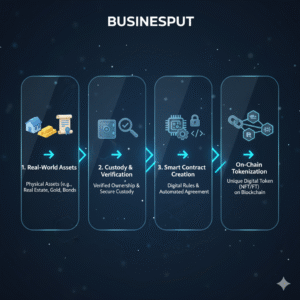
Here’s how it works step-by-step 👇
🏠 Identify the asset: Say you have a property worth $1 million.
💻 Tokenize it: It’s divided into 100,000 tokens, each worth $10.
🔗 Issue it on blockchain: Those tokens exist on networks like Ethereum, Polygon, or Sui.
🌍 Trade it globally: Anyone from any country can buy, sell, or hold those tokens safely online.
This process creates fractional ownership, making investing more inclusive and efficient. No banks, no borders, no middlemen — just verified digital ownership.
From Gold to Real Estate, Real-World Assets (RWAs) BEST INFO 2025
🧩 What Does RWA Stand For?
RWA = Real-World Asset RWAs = Real-World Assets
The term can describe both a single tokenized item or an entire class of such assets.
In the crypto and financial space, you’ll often hear about:
RWA tokens: the digital representation of the asset.
Let’s bring this concept to life with real-world examples 👇
1. 🏠 Tokenized Real Estate
Imagine a luxury apartment complex worth $10 million. It’s tokenized into 10 million tokens, each worth $1. Now, investors across the world can buy $100 or $10,000 worth — whatever fits their budget.
They receive a portion of the rental income and benefit when the property value grows.
2. 🪙 Gold-Backed Tokens
Companies like PAX Gold (PAXG) or Tether Gold (XAUT) issue tokens backed 1:1 by real gold bars stored in vaults. So when you hold PAXG, you digitally own real gold — without needing to store it physically.
3. 💵 Tokenized Bonds and Treasuries
Governments issue bonds. These can be tokenized so investors can easily buy, trade, or lend them through blockchain — unlocking massive liquidity.
For example: 💡 Tokenized US Treasury Bonds have become one of the fastest-growing sectors of RWAs in DeFi (especially during 2024–2025).
4. 🎨 Art, Cars, and Collectibles
Luxury assets like classic cars or rare paintings can also be tokenized. So instead of one billionaire owning a Picasso, thousands of people can own a share!
From Gold to Real Estate, Real-World Assets (RWAs) BEST INFO 2025
📊 Is Higher or Lower RWA Better?
That depends on context — because “higher” or “lower RWA” can mean different things.
If you mean exposure to RWAs:
✅ Higher exposure = greater stability and diversification (since these are real-world backed).
⚠️ But it can also mean lower liquidity and higher regulatory complexity.
Absolutely — many experts believe RWAs represent the next trillion-dollar opportunity in the crypto and financial world.
Let’s explore why 👇
✅ 1. Accessibility for Everyone
Tokenization breaks down high barriers. You don’t need $1 million to invest in real estate anymore — you can start with $10!
✅ 2. Liquidity for Illiquid Markets
Assets like real estate or art are usually hard to sell quickly. But once tokenized, they can trade instantly, 24/7, across global markets.
✅ 3. Transparency & Security
All transactions are visible on blockchain. You can track ownership, transfers, and payments in real-time.
✅ 4. Lower Costs & Faster Settlement
No middlemen, no paperwork, no delays. Smart contracts handle everything automatically.
✅ 5. Bridging Traditional Finance (TradFi) and DeFi
RWAs are where traditional institutions meet blockchain innovators — banks, governments, and DeFi projects are all getting involved.
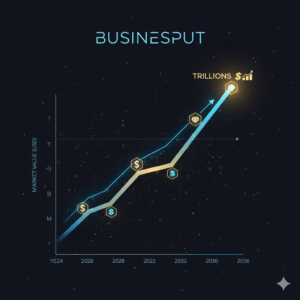
📈 According to research, the tokenized RWA market is projected to exceed $10 trillion by 2030 — covering assets like real estate, bonds, carbon credits, and commodities.
Experts predict RWAs will become the foundation of Web3 finance.
Projects like Sui, Avalanche, and Ethereum are building ecosystems for tokenizing real-world value. Governments are exploring tokenized treasuries and digital bonds. And investors are increasingly drawn to stable, yield-generating RWAs during crypto volatility.
💬 In short:
RWAs are not just another crypto trend — they’re a financial revolution that connects the old world with the new one.
From Gold to Real Estate, Real-World Assets (RWAs) BEST INFO 2025
📘 Summary: Everything You Need to Know About RWAs
Question
Answer Summary
What does RWA mean?
Real-World Assets — real things like property or gold brought onto blockchain.
What are RWAs in crypto?
Tokenized versions of physical assets traded digitally.
What does RWA stand for?
Real-World Asset.
How are RWAs calculated?
Based on asset value, tokenization model, and market factors.
What is an RWA example?
Tokenized real estate, gold-backed tokens, or digital government bonds.
Is higher or lower RWA better?
Depends — for returns higher is better, for safety lower risk is better.
What does 80% LTV mean?
You borrowed 80% of your asset’s value — moderate risk.
Are RWAs the future of investing?
Yes, they’re set to revolutionize finance by 2030.
What does 10% ROA mean?
10 cents of profit earned per dollar of assets — good efficiency.
🌟 Final Thoughts
RWAs represent a turning point in how the world invests, trades, and creates wealth. They take the reliability of real-world value and merge it with the speed and openness of blockchain.
Whether you’re a new crypto investor, a financial analyst, or simply curious about the future — understanding RWAs is essential.
So next time you hear “tokenized real estate” or “on-chain treasuries,” remember — that’s the power of Real-World Assets transforming finance, one token at a time.
🌐 The future of investing isn’t digital or physical — it’s both, seamlessly connected through RWAs. 💎🚀
💰 CoinMarketCap in 2025: Your Friendly, Complete Guide to Understanding and Tracking Cryptocurrency 🌎 Welcome to the World of Crypto — and Why CoinMarketCap Matters If you’ve ever searched for Bitcoin’s price or wondered what…
🦎 CoinGecko: The Ultimate Guide to the World’s Most Trusted Crypto Data Platform 🌍💰 Cryptocurrency has transformed from a geeky niche into one of the most revolutionary financial systems on the planet 🌐✨. But with…
🌍 LiveCoinWatch 2025: The Ultimate Crypto Tracker for Investors, Traders & Dreamers 🚀 Introduction: Welcome to the World of LiveCoinWatch Cryptocurrency never sleeps — and neither should your market tracker. That’s why LiveCoinWatch has become…